I spend a lot of time promoting and discussing topics related to responsible, sustainable, ethical and eco-friendly tourism, on social media, and not enough time writing about it here on the blog. Many people claim they want to try to be more ‘responsible’ or ‘eco-friendly’ but as many pointed out to me, they just don’t know enough and don’t really know how to go about it. So I want to write out my perspective of it, and the things I do, to help guide you all a little on the things you can be doing. I am not perfect. I could always be doing more. I could be better at it. I am the first to admit I am not actually the poster girl for it; I have my flaws. But at least I am trying…. are you?
So what exactly is responsible tourism? What does it mean to be eco-friendly? How do I know if what I am doing is ethical? What does sustainable really mean? Aren’t these all kinda the same thing? Well, yes and no. I feel like any time I try to explain one I end up talking about another. Originally I was going to outline the post by talking about each one separately but I scratched that idea and decided to talk about it all at once and hope you can follow along, because in reality they all kinda work together.
Responsible travel really comes down to being aware of the place in which you are traveling to; what’s the culture like, the customs, the language, and sometimes even the political climate. It’s about making sure the affect you have on the location is a positive one. To me, this goes hand-in-hand with the other three; ethical, sustainable and eco-friendly travel. If you look up ‘sustainable travel’ you will find out that all it means, as a traveler, is that you try to find way in which tourism can be maintained long-term without causing unnecessary harm on natural and cultural environments. How can we maintain long-term travel? How can we have little impact on the places we go? Being eco-friendly is a way.
Think about it this way, would you like someone coming into your home and breaking and destroying things before they leave? Littering all over your backyard? Feeding your pets things that aren’t good for them? And then leaving you to pick up the pieces and clean it up? No? Well neither do the locals in the place you are visiting. So be respectful. It goes back to treat them as you would want to be treated.
According to National Geographic, “the three pillars of sustainable tourism are employing environmentally friendly practices (reduce, reuse, recycle); protecting cultural and natural heritage (restoring historic buildings or saving endangered species); and providing tangible social and economic benefits for local communities (ranging from upholding the rights of indigenous peoples to supporting fair wages for employees).”
So are you getting the gist yet of what it is all about? Okay now you know kinda what ti is, but how can you change what you do in order to get more in line with sustainable travel?
Well, first of all, research. I know we love to glorify the idea of go with the flow travel and just finding a place each day to crash, joining a group from your hostel on a tour they are taking, eating food from whatever vendor you find. It’s exciting to take whatever opportunity comes our way in our travels. I get it. It’s definitely romanticized though. For me personally, emphasis on this being my personal experience as not everyone’s experience will be the same, I have a better time now planning my travels than when I used to try to go with the flow. I like knowing where I am sleeping, and learning more about the companies I am booking with. I do my research.
So how does one go about doing their research? Sometimes it’s as simple as typing into google ‘eco-friendly hotels in _______’ and searching through articles to find the right ones. I have been doing a lot of research lately for upcoming trips and I will admit it’s not always easy to know automatically which hotels are legit, and actually practice sustainability or are trying to be eco-friendly, and ones that just slap on the ‘green’ label but don’t exactly align with eco-friendly practices. So instead of just booking, through the booking website of your choice, a hotel that happens to pop up on google and has ‘green’ in the title, try to go to the hotel’s website and see what they are all about. When they are truly trying to be sustainable, or eco-friendly, they tend to have a whole section on their website to tell you about it. Not all hotel websites are fancy, so you may have to read through some information.
But what information should you be looking for exactly? Well it could be a range of things… Is there anywhere on their website they discuss their environmental impact? Small things such as not washing sheets and towels every day are a small stepping stone that most hotels are now doing, but it goes beyond that. Do they outline ways they reduce their impact on the environment? Do they use solar energy? What do they say about minimizing water usage? One of my favourite ways I have seen this information laid out is on the website for Singapore’s first Eco-Friendly Hotel, Park Royal on Pickering, which I am not affiliated with, just really enjoy their layout (check it out here).
Also looking into the local efforts. Is the hotel run by locals? If it isn’t do they at least employ locals? Do they use locally sourced products, for things like their decor or their food they serve? Also it’s not only hotels, tour companies should be looked into as well. Personally, if I am going on a tour I would rather book through a local tour company, for many reasons. For one, you are supporting the local economy directly. Also, who best to show you around a place than a local? When I was in Madagascar, we booked our tour through a company called Cactus Tours, who state on their website that they “are acting decisively to benefit the local community and to preserve the natural environment of Madagascar”. We did not just have one guide taking us through all of Madagascar, we met up with different guides in each spot who were locals of the area to show us around and take us through the rainforests, or city. It was amazing to hear stories from our guides, who grew up learning the noises each animal makes and being able to spot animals from so far away because they have been around them all their lives. Hearing their stories and seeing their passion for what they do is a once in a lifetime opportunity that you just can’t compare to anything else. (Read more on Madagascar here or here)
If you aren’t sure where to find information in regards to sustainability, or ethical travels, because there is no tab on the website of a company that directs you straight there, you can usually find it quite simply by reading the “About Us” that most companies tend to provide. If they practice any of these things, they will definitely mention it there, and perhaps guide you to more information about the specifics with links. If there is no mention of any of their sustainable practices, or anything related to responsible tourism, more than likely they got lumped into the category somehow on google for other reasons (like having green in the title when it’s really referring to the colour of the building and not their practices).
Here are some things that I was already doing that I didn’t even realize fall into the category that you can do too!
- Always put the ‘Do Not Disturb’ sign on the door, even when you are out. You are staying for a week, do you really need your room cleaned every day? This will help cut down on the power used for the vacuum, the likelihood they change your sheets and towels (if they do that, things have changed a lot in that regard) and the use of chemical products to clean.
- Turn lights, A/C or any electrical items off when not in use. Yeah, okay, it’s not your house. You aren’t paying the power bill. But it’s not about the money. If you aren’t in the room, everything should be off. I have noticed hotels making it mandatory for your key card to be in a slot beside to door in order for the room to have power. Love this.
- Stop being lazy and just walk places! You see more anyways and reduce the amount of gas and pollution. I wrote a whole post here on why I enjoy walking during travels anyways.
- Don’t take brochures, maps and so on unless you need them. And return them after. Or leave them somewhere they can be of use. Don’t jus throw them out. I personally use my phone for maps, and get a sim card in each new place to make it easier. Less paper waste made.
- What about all that unused shampoo, conditioner and so on, in the mini bottles in your hotel? Many hotels throw it out, apparently. Though some make an effort and just refill the bottles. Always good to find out which they do. It used to be the norm to take these (to donate to shelters for one time use for those staying there, or future travels), but since many hotels are reusing the bottles and just refilling, taking them now might not be the best idea.
- Buy souvenirs made locally. I know personally I love going to markets during my travels, the best idea is to find souvenirs made locally. Get a dress made by a local tailor. Find out what their local handicraft is and buy that. Sometimes it will cost more to buy something handmade and authentically local then something mass produced in another country but the quality and contribution to local economy is worth it.
- When walking through cities, forests, beaches, and so on, if you cannot find somewhere to throw any trash you accumulate (like packages of food), make sure you have a bag to keep it in until you find somewhere to dispose of it. Even if you see locals littering, or notice a ton of garbage on the ground, it doesn’t mean you should contribute to the problem.
- Take quick showers. Or shower with a friend. Saves water, seriously.
- Eat at locally owned restaurants. I love trying local cuisine and even more so when made directly by locals. A great option is to book though Traveling Spoon and actually go to a local’s house and learn how to prepare the food and eat a meal with a local.
- Book trips to places that are lesser known destinations. Sure I get wanting to see the place that keeps coming up on your feed over and over again. But seek out the places outside of the main tourist areas too.


Ethical Animal Tourism
Alright now the animal stuff, which I talk about all the time. Here’s the thing, I wasn’t always aware. There was a time when I was also a ‘basic bitch’ (am I using that term right?) and I went to Tiger Kingdom when I lived in Thailand. It makes me sick to think about how stupid I was. I am not going to lie and say I wasn’t excited at the time, to see cute baby tigers and be so close to them. But I remember a feeling in the pit of my stomach. I knew it was wrong. Tigers should want to eat me, not pose for photos with me. I convinced myself that it wasn’t as bad as the one in Bangkok I heard horror stories of. The tigers didn’t look abused… because I know what an abused tiger looks like? I can’t tell you what was done to those tigers to make them be okay with people in their cages with them, but the fact that they are in cages waiting for photographs to be taken with tourist after tourist speaks volumes alone. I regret ever going there but I am glad I woke up and realized what a shitty thing it is.
So how do you know if an animal encounter is ethical or not? There is so much information online that if you cared, you could figure it out. There is also many opinions on the matter. Here are my thoughts, personally, as someone who is not a zoologist, and hasn’t studied animals and their behaviour in any way… we are animals. People and animals have interacted for as long as we have coexisted on the planet. Animals eat animals. That is the circle of life. I am not vegan or vegetarian. Neither are many other animals out there. To say that we should not go anywhere near animals ever, is stretching it to unrealistic measures. Yes, it’s better to say that and have people at least back off a little than nothing. But animals coexist in this world and the thing that bothers me most, personally, is using the animals for our own entertainment.
I love animals. I had been known to say the phrase ‘I want one’ about every damn cute animal I see. Am I serious? No. Not even really when talking about a dog or something ‘domestic’. I don’t want the responsibility. It’s an exaggeration, to express how cute I think the animal is. But the problem comes when people are serious and they take animals out of the wild, our their habitat and try to domesticate it. Or try to make it perform for audiences. From ridiculous things like performing in the circus, to small things like training it to take food from tourists (often times animals will come to you for food because they are starved otherwise… not always the case, but important to find out if it is).
There are so many places, sanctuaries, reserves and so on, trying to make a difference. The most notable being Elephant Nature Park, in Chiang Mai, Thailand. The owner, Lek, has been a champion in fighting for the rights of elephants in South East Asia, mainly Thailand. One visit there, and you will understand the magnitude of the problem in animal tourism right now. I visited in 2012, and I am headed back in two weeks again.
- Do not feed wildlife. This makes them prone to relying on humans for food. Wildlife and animals in reserves are different. Keep your distance from actual wildlife (this is what zoom lenses weren’t invented for… okay maybe not entirely true but probably sorta).
- Anything forcing animals to perform tricks, is not on the up and up. They don’t just perform these naturally, they are broken and trained.
- Elephant rides are so much more damaging to elephants than you can even imagine. Just the simple fact that the elephant’s spirit is broken in order for the elephant to allow you to ride it, let alone the weight on it’s back.
- There are no guarantees with animals. If you are at a sanctuary and they ‘guarantee’ certain animal encounters, something is wrong there. Animals are unpredictable.
I try my best to research as thoroughly as possible if my travels involve any kind of animal encounter. Even if it’s a safari where you aren’t actually interacting with the animals, but just viewing them from afar. I have read horror stories of tour companies driving too close to migrating wildebeest and disrupting their space. Local companies that put the animals first are the way to go. Sometimes it’s hard to find information on places. Not every tour, company, sanctuary, reserve, or zoo, is written about and evaluated by people outside of those marketing the place. That’s why it’s important to just look for the signs mentioned previously. Read through the negative reviews on trip advisor… sure a lot of people complain about dumb shit in negative reviews but you’ll find useful information about the observations of the animals in there too.


Volunteering
I am all for volunteering in your travels…. if you are volunteering your time in something you can actually help in. I am a teacher, if I were to volunteer I would volunteer in a school. Or as a photographer to promote awareness to something. I would never volunteer to build a house, that house ain’t going to stand long. I am not going to volunteer to actually work with animals, when I know nothing about them. Sure there are programs at sanctuaries that you can volunteer with animals that are legit, but let’s be honest, you aren’t actually working with the animals directly, these are places you are usually just helping clean, cook or help with things outside of the direct work with animals.
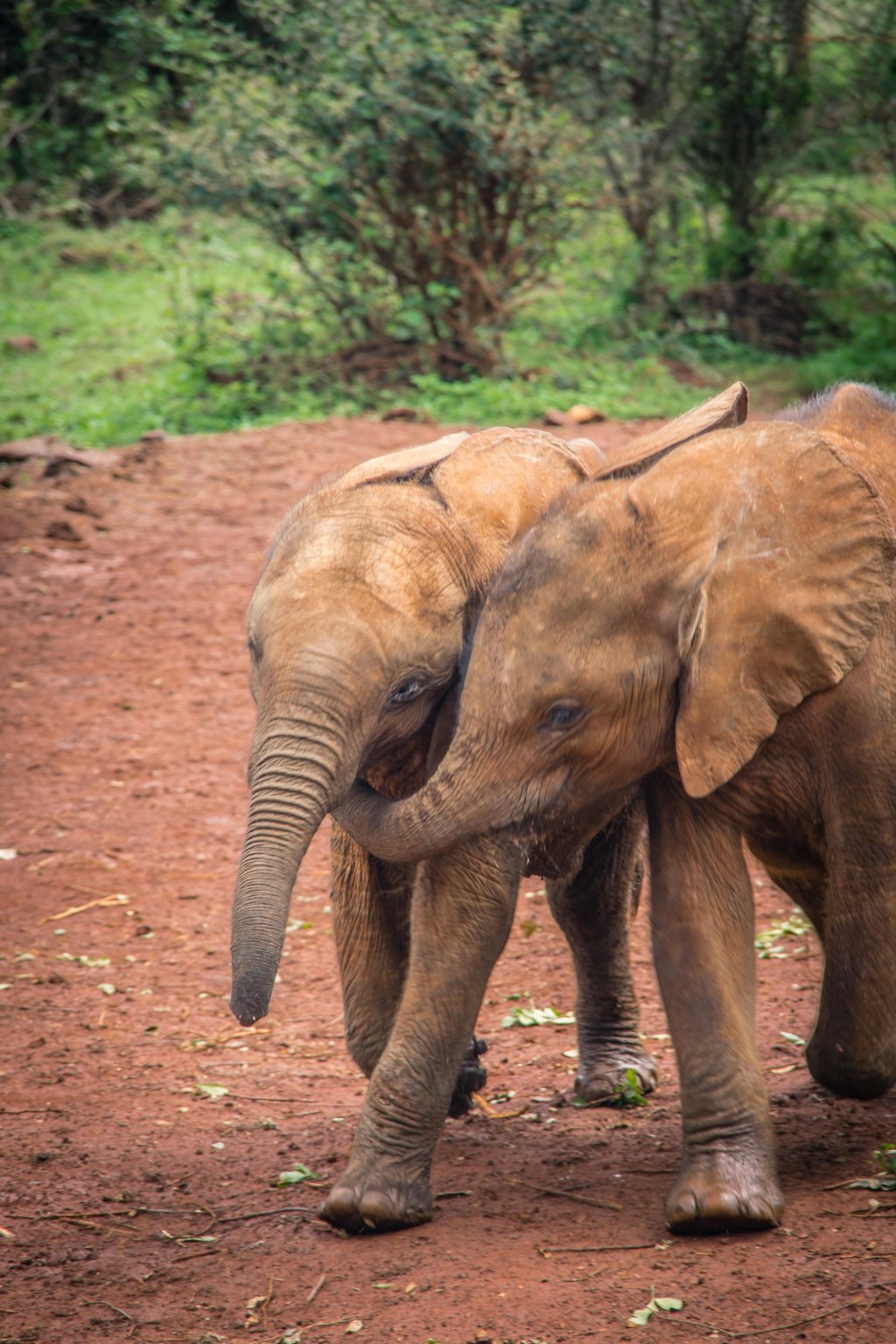
Places like David Sheldricks’ Elephant Orphanage do not allow volunteers because for one, they don’t want elephants forming attachments with people only there temporarily. And second, they hire qualified people who are there to help the proper care of the elephants in order to reintegrate them into the wild when they are old enough. They actually only allow visitors for one hour each day, behind a rope, to watch as the animals are being fed (and special later visitors to those who sponsor an elephant directly). Limiting the amount of time with outsiders, to help facilitate their reintegration back into the wild more smoothly. Not all programs are like this, also not all animals are being reintegrated into the wild. Sometimes that’s just not possible. But i digress…
Basically, if you have some kind of skill that is worth volunteering, by all means get yourself out there and do it. Find organizations to work with. Do something that directly helps the locals. My girl Kiona, from How Not to Travel Like a Basic Bitch, volunteered her time in Mexico recently to teach locals about nutrition. That’s her field of knowledge, that girl got her PhD. So through her instagram friend (and mine too now!) Saya, she was connect with the program Do Good As You Go, and found out how her skills could be useful and dove right in.
Just make sure before you volunteer you ask yourself who is benefitting from your volunteer work. The locals or you? Are you doing it to feel better about yourself? Are you #doingitforthegram? Or are you doing it cause you can provide a skill or service to truly help the community? (Same goes with teaching English… which you can read my opinion about here).
In the end, being eco-friendly, and being a responsible/sustainable/ethical traveler isn’t that hard. And no one expects you to be perfect. The more you research, the more you know. Cause really, you don’t know what you don’t know. For me, it will always come down to research. Sometimes I get to the point where I find a great locally run company offering a tour, but as soon as I see they offer elephant rides as well, I am less inclined to book with them. Just cause they are local, doesn’t mean they are ethical. That’s why research is most important, above all. I tend to use the group Women For Ethical Travel when I want personal experiences from other women, when I am unsure of how to find something or if I can’t find information on a specific place. It’s a shame groups like this aren’t more utilized and other groups go viral.
I know what I do may seem small and insignificant to some, and too much to do theirselves to others, but if everyone were to make minor changes in the way they travel, becoming more responsible, travel can become more sustainable. Small steps, big changes. Do what you can, when you can. I will have more specific and less general posts about different aspects of responsible, sustainable, ethical and eco-friendly travels, but I felt the need to get this out first. Mostly as a reaction to many people’s request for help on recent Instagram posts. Now you know a little bit, so what changes are you going to make?


 i am not the word
Leave a comment